
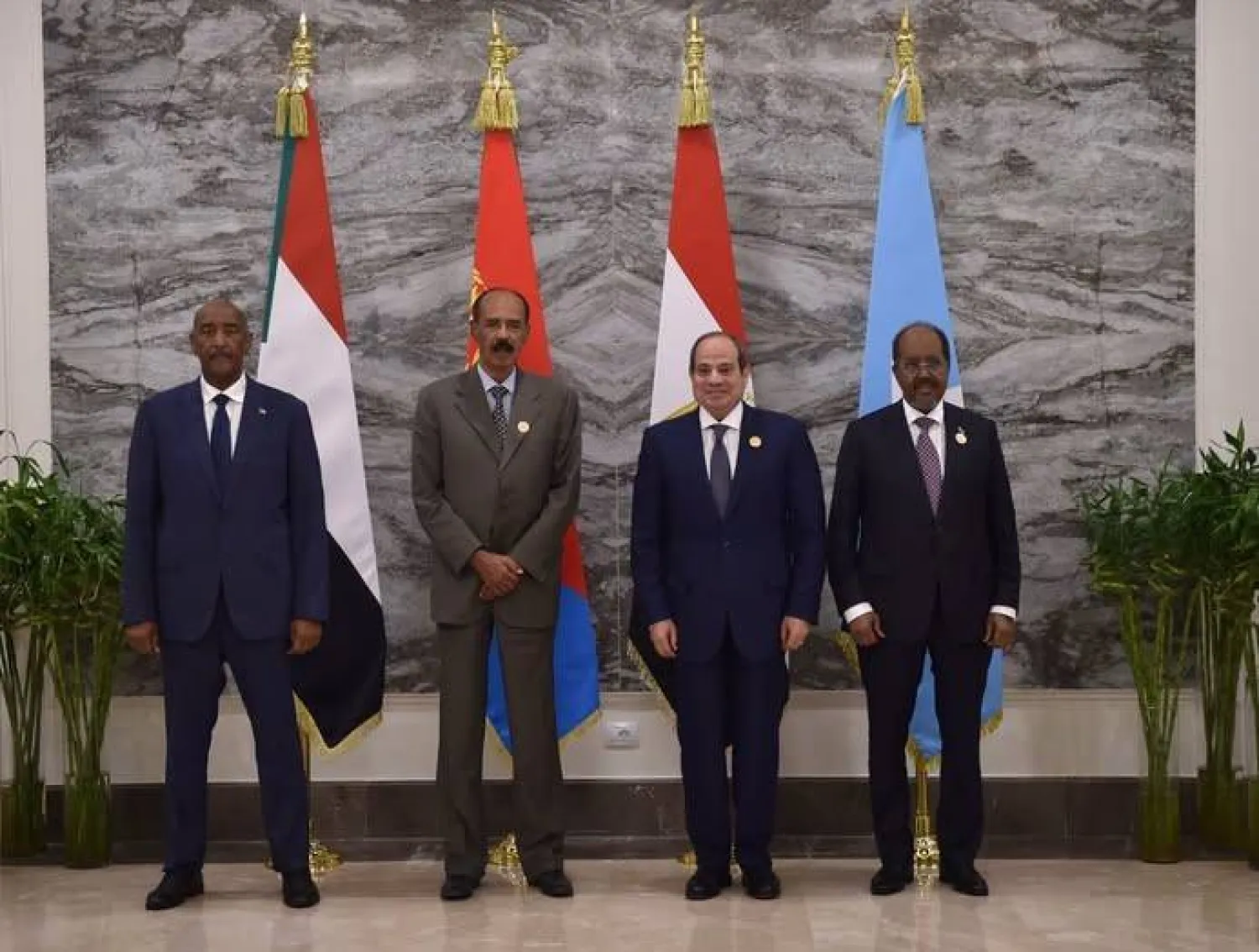
A summit, the first of its kind between Egypt and three countries from the Horn of Africa region – Sudan, Eritrea, and Somalia – was held in the Egyptian city of El Alamein on Sunday, following an Ethiopian escalation that included an exchange of severed relations with Asmara and the expulsion of a diplomat from Cairo.
That summit carried deterrent messages to Ethiopia, according to an expert on African affairs who spoke to Asharq Al-Awsat, especially regarding the Nile, Sudan and Red Sea issues, while adhering to the principles of stability in the Horn of Africa region.
In October 2024, a tripartite summit was held, bringing together the leaders of Egypt, Eritrea and Somalia, but this was the first time that the Sudanese army chief, Lieutenant General Abdel Fattah al-Burhan, participated.
According to the “Joint Declaration of El Alamein” issued by the four-way consultative summit that brought together President Abdel Fattah al-Sisi with his Eritrean counterpart, Isaias Afwerki, Somali counterpart Hassan Sheikh Mohamud, and the head of the “Transitional Sovereignty Council” in Sudan, Abdel Fattah al-Burhan, it addressed current regional and international issues and the strengthening of cooperation and coordination.
The leaders stressed the need to respect the sovereignty, independence and territorial integrity of the countries of the region, to uphold the values of good neighborliness, to reject interference in the internal affairs of the countries of the region under any pretext, and to work to support national institutions and promote political and peaceful solutions to conflicts.
The participants agreed to “support the unity of Sudan and reject the creation of any parallel entities, encourage the resumption of the political process with Sudanese ownership and leadership, support national institutions, and completely reject any support for mercenaries.”
The summit stressed “support for the unity and sovereignty of Somalia, and rejected any interference or actions targeting its territorial integrity and national sovereignty, as well as rejecting any recognition or support for what is called Somaliland, considering that this is an infringement on the sovereignty of the Federal Republic and its territorial integrity.”
The leaders affirmed “the principle of freedom of navigation and that the governance of the Red Sea is the exclusive responsibility of the littoral states,” stressing “the complete rejection of any unilateral actions that harm the existing water uses of the two Nile River downstream countries (Egypt and Sudan).”
They agreed to “establish a mechanism to follow up on the outcomes of this consultative summit, which will be held periodically, and whenever necessary, to enhance consultation and coordination among them.”
The Egyptian announcement of the summit on Saturday came after two separate meetings between Sisi and Eritrean President Isaias Afwerki and his Somali counterpart Hassan Sheikh Mohamud, in which they discussed developments in the Horn of Africa and strengthening Red Sea security, amid assurances of rejecting interference in the internal affairs of countries.
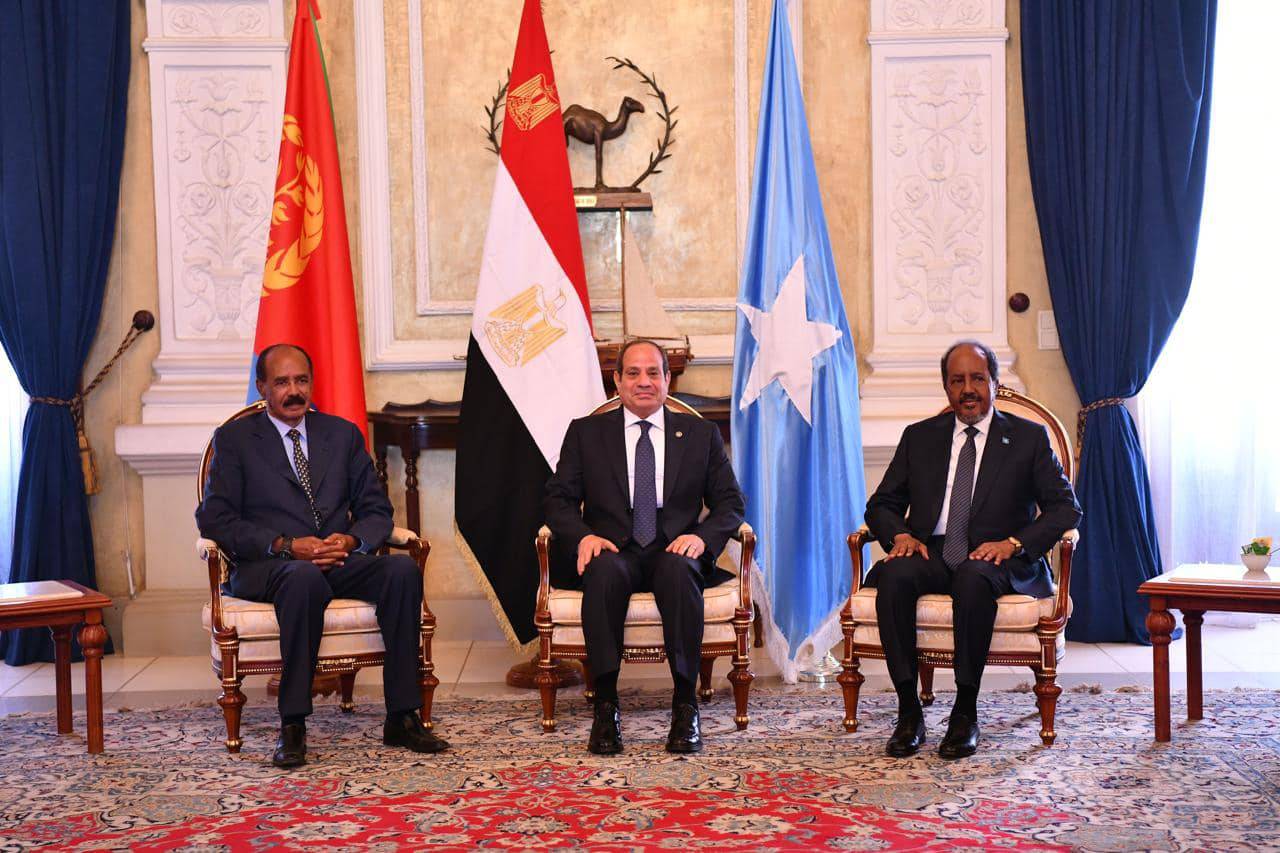 A previous summit between the presidents of Egypt, Somalia and Eritrea in the capital Asmara (Egyptian Presidency)
Hassan Sheikh Mohamud arrived in Cairo on Saturday, days after visits to Djibouti and Ethiopia during which he discussed strengthening relations and regional development.
The summit came after the Tigray People’s Liberation Front (TPLF) escalated its actions against the federal government in late September, days after forming a seven-party alliance aimed at overthrowing Prime Minister Abiy Ahmed’s government. This was followed by an Ethiopian escalation involving the severing of relations with Eritrea and the expulsion of a diplomat from Egypt, allegedly due to interference in the country’s internal affairs, despite denials from Asmara and Cairo.
deterrent messages
Hussein Al-Bahiri, an expert on African affairs at the National Center for Middle East Studies, believes that the summit carries a “deterrent message” to Ethiopia, indicating the presence of countries keen on maintaining security and stability in the Horn of Africa region, rejecting the diplomatic and political escalation that Addis Ababa is currently undertaking against Eritrea and Sudan, in an attempt to ignite the region with regional wars to cover up Ethiopia’s internal crises, most notably the conflict in the Tigray region.
The summit aims to maintain the balance of power in the Horn of Africa region, especially as it comes after the Ethiopian Prime Minister met with Djibouti’s President Ismail Omar Guelleh, and then with the President of Somalia a few days later, according to Al-Bahiri.
He explained that Somalia could play a balancing and mediating role between Ethiopia, Sudan, Eritrea and Egypt, in light of the remarkable political rapprochement between Somali President Hassan Sheikh Mohamud and Ethiopian Prime Minister Abiy Ahmed.
Although the summit's stated aim is to promote stability and calm, Al-Bahiri believes that indicators suggest the Horn of Africa region is heading towards further escalation and political and diplomatic tension in the near future, especially given Ethiopia's insistence on a military-style maritime outlet in the Red Sea, despite Egyptian and regional rejection.
In this context, Al-Bahiri does not rule out the scenario of armed clashes breaking out between Ethiopia and Eritrea with the aim of regaining control of the Eritrean port of Assab, as well as military confrontations between Ethiopia and Sudan due to Ethiopian interference in Sudanese internal affairs and its involvement in fueling the conflict by supporting the Rapid Support Forces militias, in addition to the failure of the Tigray region confrontations to end.