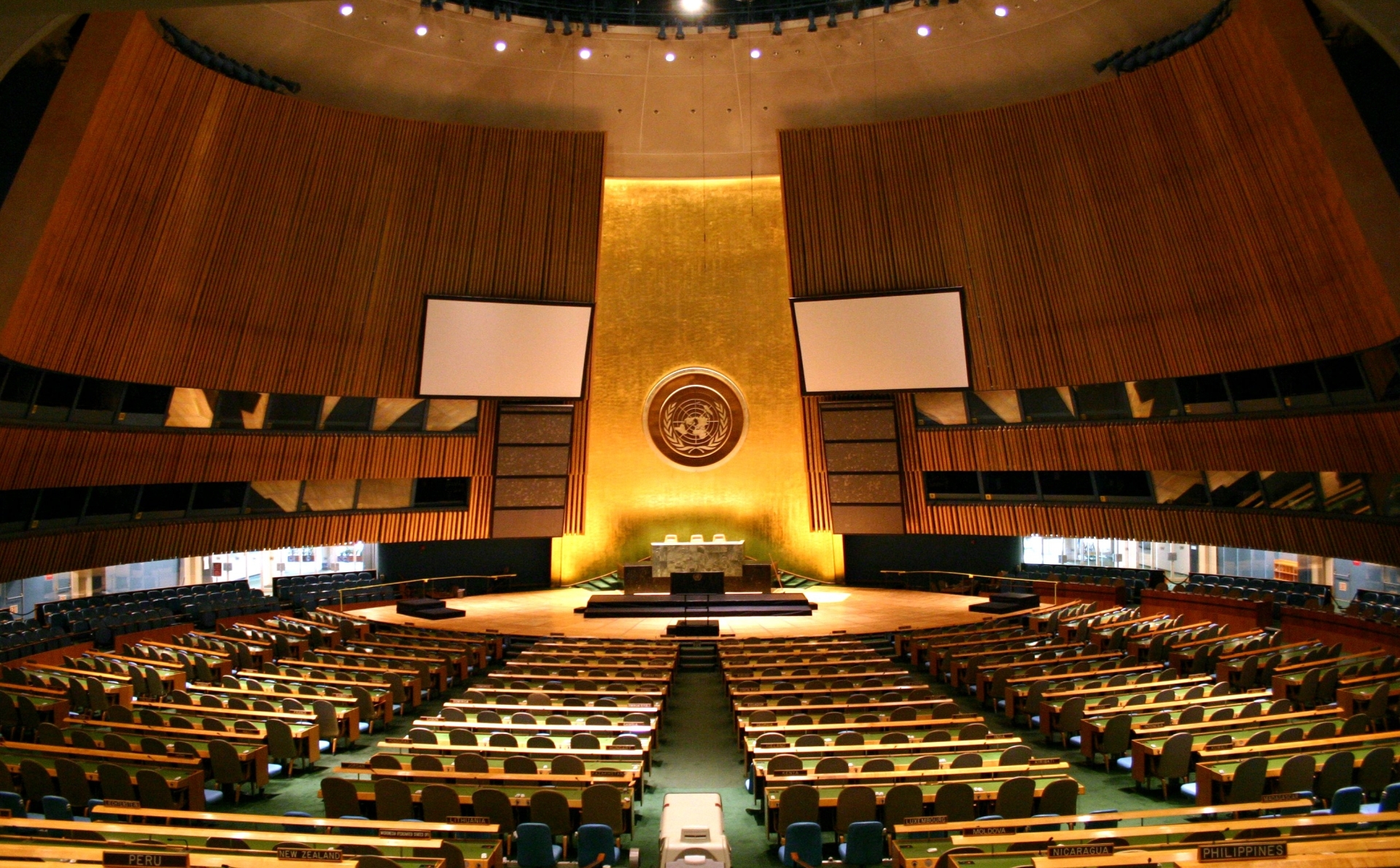
As world leaders gather this week to participate in the UN General Assembly in New York, Eritrea is doing so from a completely new diplomatic position.
Four days before the opening, the US removed Eritrea's military, the country's only permitted party, and several of the regime's economic institutions from its sanctions list, as Blankspot previously reported.
The national emergency that President Joe Biden declared in 2021 due to the Tigray War in northern Ethiopia had expired, thus eliminating the legal basis for the sanctions.
The list included the army, the ruling PFDJ party, the party-loyal business group Red Sea Trading Corporation and the Hidri Trust foundation. High-ranking Eritrean representatives Abraha Kassa and Hagos Ghebrehiwet were also removed.
In Asmara, the announcement was welcomed as the beginning of something new. Eritrean Information Minister Yemane Gebremeskel described the decision as an expression of a “reserve of constructive political goodwill” and said it could open a new chapter in relations between the countries. In the long run, it could mean Eritrea being allowed to be part of the international banking system with SWIFT and IBAN codes.
Eritrea also enters the UN week with a new role. The country has been elected as one of the 21 vice-presidents of the General Assembly during the 81st session. Eritrea is thus part of the General Assembly's presidium together with the United States, Russia, China, France, the United Kingdom, Egypt and Finland, among others.
The post is mainly organizational. But for the regime in Asmara it has symbolic value: the country can point to both the UN mission and the lifted sanctions as evidence that international isolation is being broken.
Last year, Eritrea used UN Week for a series of bilateral meetings. Osman Saleh met with the foreign ministers of Egypt, Iran, Algeria and Nicaragua, among others. A meeting was also held with Sweden's Foreign Minister Malmer Stenergard, where Eritrea was urged to release Dawit Isaak on humanitarian grounds. The meeting also led to a follow-up, unique ministerial visit to Asmara in December 2025.
Blankspot has contacted the Minister of Foreign Affairs to ask if any new meetings are planned this year.
The lifting of the sanctions by the US did not come as a surprise, as it was already reported in the spring that the Trump administration was considering restoring relations with Eritrea and allowing the sanctions to expire. The country's long coastline on the Red Sea had gained growing strategic importance as the world's eyes turned to the Bab al-Mandab.
Eritrea's port of Assab is located near the narrow strait that connects the Red Sea with the Gulf of Aden.
A central figure in the rapprochement has been Massad Boulos, President Donald Trump's adviser on Arab and African affairs. According to Eritrean Information Minister Yemane Gebremeskel, Boulos has met with Eritrean Foreign Minister Osman Saleh in Cairo, and Egypt appears to have served as a liaison between Washington and Asmara.
Already in August, Boulos was forced to respond to reports that the United States was negotiating a secret deal with Eritrea.
"Let me be perfectly clear: the claims that we are negotiating or considering a secret deal with Eritrea aimed at any other regional partner are categorically false," he wrote.
Boulos did not name the other state, but the statement was interpreted as a reference to Ethiopia.
The American approach has been criticized by both human rights organizations and regional observers. Human Rights Watch warned in May against easing sanctions without demands for accountability and clear improvements in human rights.
The organization's Africa director, Laetitia Bader, wrote that such a turnaround could be perceived as a signal that future abuses can occur without consequences.
She pointed to both Eritrea's actions during the war in Tigray and the repression within the country: the unlimited national service, the arbitrary detentions, the lack of free media and the many people who have been held in isolation without charge or trial.
Michael Rubin, a former Pentagon official and now affiliated with the conservative think tank Middle East Forum, has also warned against making Eritrea a strategic partner.
He described the country as far too insecure and pointed out that the regime has long taken an anti-American stance. He also said that there is great uncertainty about what will happen after President Isaias Afwerki, who has ruled the country since independence.
Neither the White House nor the US State Department have reported any Eritrean counter-performance in connection with the lifting of sanctions. Nor has Washington publicly demanded that Eritrea account for what happened to the journalists who were arrested in September 2001 and have since been kept isolated from the outside world.