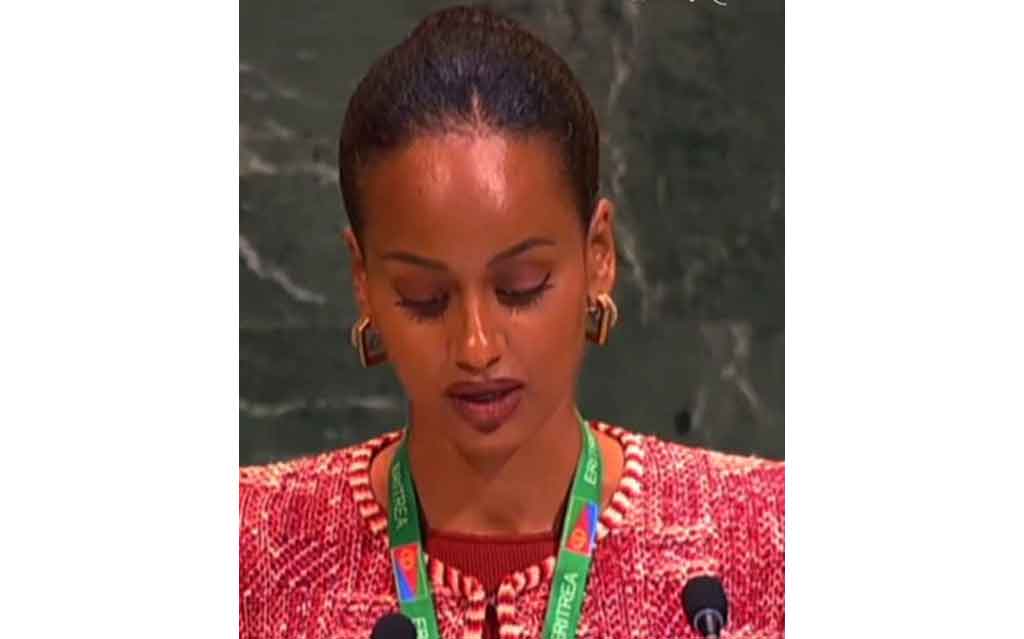
Speaking at the United Nations General Assembly during its 80th session, the delegate from Eritrea stated that these principles include sovereign equality, interference and prevention, and the threat of the use of force.
He warned, in that regard, against "any adventurous initiative" aimed at fabricating pretexts for intervention in Cuba's internal affairs.
He also stressed in that context the responsibility of the international community as a whole and the United Nations to unequivocally condemn these illegal and irresponsible acts.
Speaking on behalf of a coalition of some twenty countries, the Eritrean representative described the United States' blockade against the island as "abusive and unjust," which, she opined, has been tightened to an extreme degree with serious humanitarian consequences.
He denounced that this policy of encirclement, with damages exceeding eight billion dollars, was aggravated by the "systematic and frequent threat of the use of force" against the Caribbean nation.
The Group of Friends clearly positioned itself in favor of peace to "prevent a military aggression against Cuba," and reiterated the need to end the economic, commercial, financial and energy blockade, considering the latter, due to its effects, as a true naval blockade.
The representative of Eritrea described the nearly 70-year-long siege as one of the “most serious and prolonged” systematic violations of International Law and the Charter of the United Nations.
He stated that these actions not only go against the principles and purposes of this multilateral organization, but also against human rights, considering it as "a form of collective punishment against the Cuban population."
The bloc of countries reaffirmed its historical and principled stance by expressing its unwavering solidarity with the Cuban people and government, and condemning the adoption of “additional extreme measures” by the United States, which are aimed at further tightening the blockade. In this regard, it referred to actions intended to obstruct fuel supplies and penalize trade and economic relations between Havana and third countries.
He asserted that these types of actions are based on a narrative built on falsehoods that seek to present Cuba as a threat, when in reality it does not represent one, but rather deliberately seeks to stifle the Cuban economy and cause additional suffering.
He stressed, in that regard, that these measures are clearly intended to deliberately worsen the living conditions of the population and deprive the Caribbean country of resources, including vital energy supplies for economic activity and social welfare.
ga/jcd